



The Road to $1 Trillion: How the EV Industry is Reshaping the Global Economy
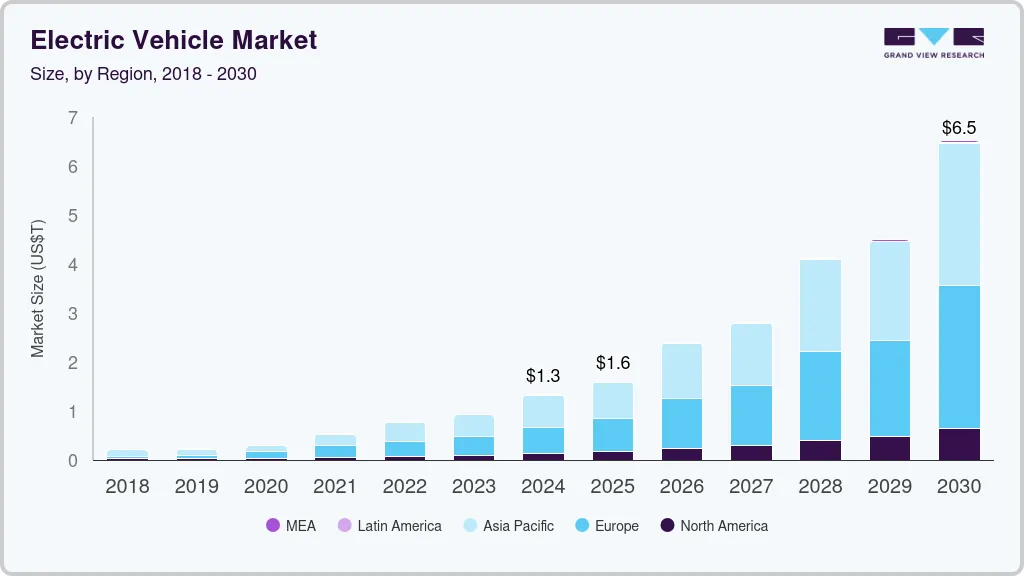
The global automotive landscape is witnessing a historic transformation. What was once a niche market for early adopters has officially accelerated into a financial juggernaut. As of April 2026, the electric vehicle (EV) industry is on the verge of hitting a $1 trillion valuation, driven by geopolitical shifts, rapid tech gains, and a massive surge in consumer demand.
Table of Contents
- The Numbers
- Key Drivers
- Technological Breakthroughs
- The “Oil Shock” Factor
The Numbers: Crossing the $1 Trillion Threshold
Recent market reports from early 2026 suggest that the total addressable market for EVs—including passenger cars, commercial fleets, and charging infrastructure—is growing at a CAGR of nearly 20%.
Furthermore, by 2030, analysts expect EVs to account for over 50% of all new car sales globally, moving up previous timelines by nearly two years.
Key Drivers: Why the Market is Exploding in 2026
The surge toward a trillion-dollar valuation is not a happy accident. Instead, it is the result of several converging factors:
- Falling Battery Costs: Average battery prices have finally dropped to approximately $80 per kWh. Consequently, EVs are now cost-competitive with petrol vehicles even without government subsidies.
- Infrastructure Boom: In 2026 alone, the deployment of ultra-fast chargers (above 350kW) has increased by 40% along major freight and highway corridors.
- Secondary Market Growth: Used EV sales are hitting record highs. Because modern batteries are retaining 95% of their range after five years, buyers are no longer afraid of “battery death.”
Technological Breakthroughs: Range and Charging
In 2026, the industry has solved the two biggest complaints: “range anxiety” and “charging time.”
- 325-Mile Average: The average real-world range for 2026 models has climbed to 325 miles (approx. 523 km).
- 10-Minute Charges: New 800V architectures allow the fastest EVs to add 100 miles of range in under 10 minutes.
- Solid-State Progress: While still in limited production, solid-state battery pilots are proving that the next generation of EVs will be even lighter and safer.
The “Oil Shock” Factor: Geopolitics and Adoption
A significant catalyst in early 2026 was the sudden spike in global oil prices following regional conflicts. As gasoline prices surged to record levels, consumer mindset shifted overnight.
Drivers who were once hesitant to switch to electric now see EVs as a “safe haven” from volatile fuel markets. As a result, the transition is no longer just about the environment; it is about economic stability for the average household.
For more deep dives into how this trillion-dollar shift affects the local market in Nepal, check out the latest tech reviews at or explore premium EV accessories at .