
The U.S. Now Has Over 250,000 EV Charging Ports: Public Refueling Infrastructure Crosses a Historic Milestone
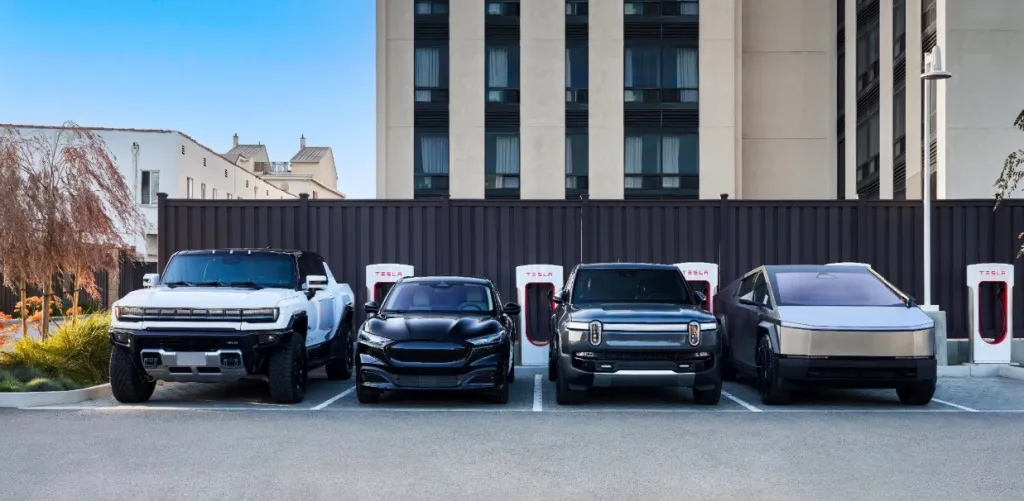
The narrative surrounding electric vehicle adoption in the United States is undergoing a massive structural shift. While skeptics frequently point to range anxiety and a perceived lack of charging options as major hurdles, the hard data tells a completely different story.
According to recent government data from the Department of Energy’s Alternative Fuels Data Center, the United States is now home to over 250,000 public EV charging ports. This monumental milestone highlights the rapid, ongoing expansion of the nation’s refueling grid. In fact, it effectively brings the country halfway to the federal goal of establishing 500,000 public chargers by 2030.
Table of Contents
- Breaking Down the Numbers Behind the Milestone
- The Dynamic Roles of Level 2 and DC Fast Chargers
- Tesla’s Dominance and Emerging Competitors
- A Massive Boom Defying Changing Regulations
- What This Infrastructure Expansion Means for Drivers
Breaking Down the Numbers Behind the Milestone
The official government repository now explicitly logs exactly 250,406 individual public charging hookups operating across 80,543 distinct station locations. This is not just a nominal increase; it represents an incredible acceleration in infrastructure deployment.
To put this pacing into perspective, the combined number of public Level 2 and fast-charging ports surpassed the 100,000 mark in April 2021. Following intense private and commercial investments, that number shot past 200,000 in March 2025. Consequently, crossing the quarter-million threshold proves that the physical framework supporting alternative energy vehicles is expanding at an unprecedented rate.
The Dynamic Roles of Level 2 and DC Fast Chargers
Building a resilient, reliable charging network requires a strategic mix of different charging technologies tailored to driver behaviors. The current 250,000+ public plug matrix is divided into two primary categories to handle different transit needs:
- Public Level 2 Chargers: This category makes up the vast majority of the network, counting over 180,000 active plugs across the country. Because they are cheaper to build, these installations are perfect for longer dwell times. Drivers can seamlessly top up their batteries while their cars are street-parked overnight or while they enjoy a movie or dinner.
- DC Fast Chargers: Serving as the backbone for long-distance highway travel, the network now boasts north of 73,000 high-output fast chargers. These high-voltage systems can meaningfully replenish an EV battery in a quick 20-to-30-minute window. This turns what used to be an overnight chore into a brief highway pit stop.
Tesla’s Dominance and Emerging Competitors
When evaluating high-speed, long-distance highway refueling, a single corporate entity continues to hold a staggering lead. Tesla’s proprietary and increasingly open Supercharger network remains responsible for roughly 38,000 DC charging ports across the United States. This massive footprint effectively gives Tesla a commanding 52% market share of all DC fast-charging plugs nationwide.
| Charging Network | Primary Charger Type | Approximate U.S. Plug Count | Core Operational Strength |
| ChargePoint | Level 2 (Slower) | 76,000+ Plugs | Dominates destination charging at workplaces and stores |
| Tesla Supercharger | DC Fast (High-Output) | 37,700+ Plugs | Provides unrivaled, seamless highway fast-charging access |
| Ionna | DC Fast (High-Output) | 1,130 Plugs | A fast-growing automaker coalition with 120 active sites |
| Rivian Adventure Network | DC Fast (High-Output) | 1,000+ Plugs | Focuses on robust, outdoor-centric travel corridors |
A Massive Boom Defying Changing Regulations
What makes this infrastructural milestone particularly remarkable is that the charging sector is booming even as electric car sales experience a temporary rough patch. Softening vehicle demand and shifting emission regulations have forced several legacy automakers to recalibrate their manufacturing timelines. Despite these headwinds, charging network operators have doubled down on their long-term growth plans.
Interestingly, private commercial corporations and retail brands are driving the vast majority of this expansion. Major retail centers, convenience stores, public libraries, and restaurants are independently deploying charging hardware to attract affluent EV drivers. This massive corporate push has largely outpaced state-managed projects. For instance, despite a $5 billion federal funding commitment via the NEVI program since 2021, government-funded sites accounted for a minor fraction of the total active public charging grid.
What This Infrastructure Expansion Means for Drivers
Ultimately, crossing the 250,000 public port threshold signals that the physical limitations holding back alternative energy adoption are fading fast. As major networks open up their plugs to broader cross-brand compatibility, finding a fast, reliable charge on the go is becoming as straightforward as locating a traditional gas pump.
Combined with the millions of private residential wall boxes that handle the vast majority of daily driving routines, the American charging ecosystem is proving to be highly resilient. Moving forward, this continuous, aggressive network growth ensures that the transition toward zero-emission transportation rests on a rock-solid foundation.
To track how these massive international infrastructure trends influence changing local eco-commuter tax structures and alternative fuel platforms, follow the comprehensive data updates over at Bijulidai. Alternatively, to check out certified high-efficiency home charging adapters, smart dashboard docks, and premium vehicle maintenance accessories, browse the digital catalog today at Oliz Store.