




The Clean Car Standard is Slashed: Will New Zealand Become a Dumping Ground for High-Emission Cars?
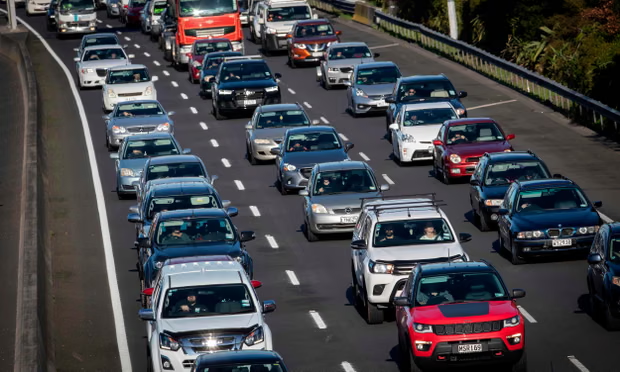
Major changes to New Zealand’s vehicle emissions policy have landed, and they’re already creating strong reactions. The government has sharply reduced the strength of the Clean Car Standard (CCS)—a key policy that encouraged the adoption of low-emission vehicles. The speed and scale of the cut have raised alarms among EV advocates, who fear the country could become a “dumping ground” for old, high-polluting cars.
Advocates Warn of a Flood of High-Polluting Imports
Drive Electric board chair Kirsten Corson issued a strong warning about the consequences. She argues that car exporters may now divert older, dirtier vehicles to New Zealand because penalties here are far lower than in countries like Australia. This gap, she says, could push a larger volume of high-emission models into the used-car market.
Penalty Cuts Create Shockwaves Across the Industry
The scale of the policy shift is significant.
The penalty for new-vehicle emissions has fallen from $67.50 to just $15 per gram of CO₂. Penalties for used imports have also dropped sharply.
The Imported Motor Vehicle Industry Association welcomed the cut. Its chair said the old targets were so strict that some businesses were closing. In their view, the more relaxed settings give the industry breathing room.

Government Defends the Move as Consumer Relief
Transport Minister Chris Bishop pushed back against the “dumping ground” claims. He argued that the rapid change was necessary to shield consumers from rising costs. Without the adjustment, he said New Zealanders would face $264 million in extra charges through higher car prices.
He also responded to concerns about declining EV sales. He noted that the slump followed multiple factors: shrinking global supply, high international prices, and the removal of the Clean Car Discount—not just policy changes.
Climate Concerns Grow as Long-Term Impact Looms
Climate advocates are questioning the long-term implications. New Zealanders typically keep their vehicles for 15 years—sometimes up to 20. Decisions made now will therefore shape the country’s transport emissions for decades.
These groups argue that strong transport policies are essential to meeting Paris Agreement climate targets. Despite this, the Minister chose not to request a detailed climate impact assessment, saying the policy change would have a “negligible” effect. Advocates strongly dispute that conclusion.
A Major Shift in New Zealand’s Vehicle Market Ahead
Whether buyers want cleaner options or cheaper high-emission cars, New Zealand’s vehicle stock is about to change dramatically. As the updated standard moves into law by the end of the week, the debate over the future of the country’s used-car market continues to intensify.