

EV Rules in Nepal 2026: Tax, Registration, Charging & Key Changes
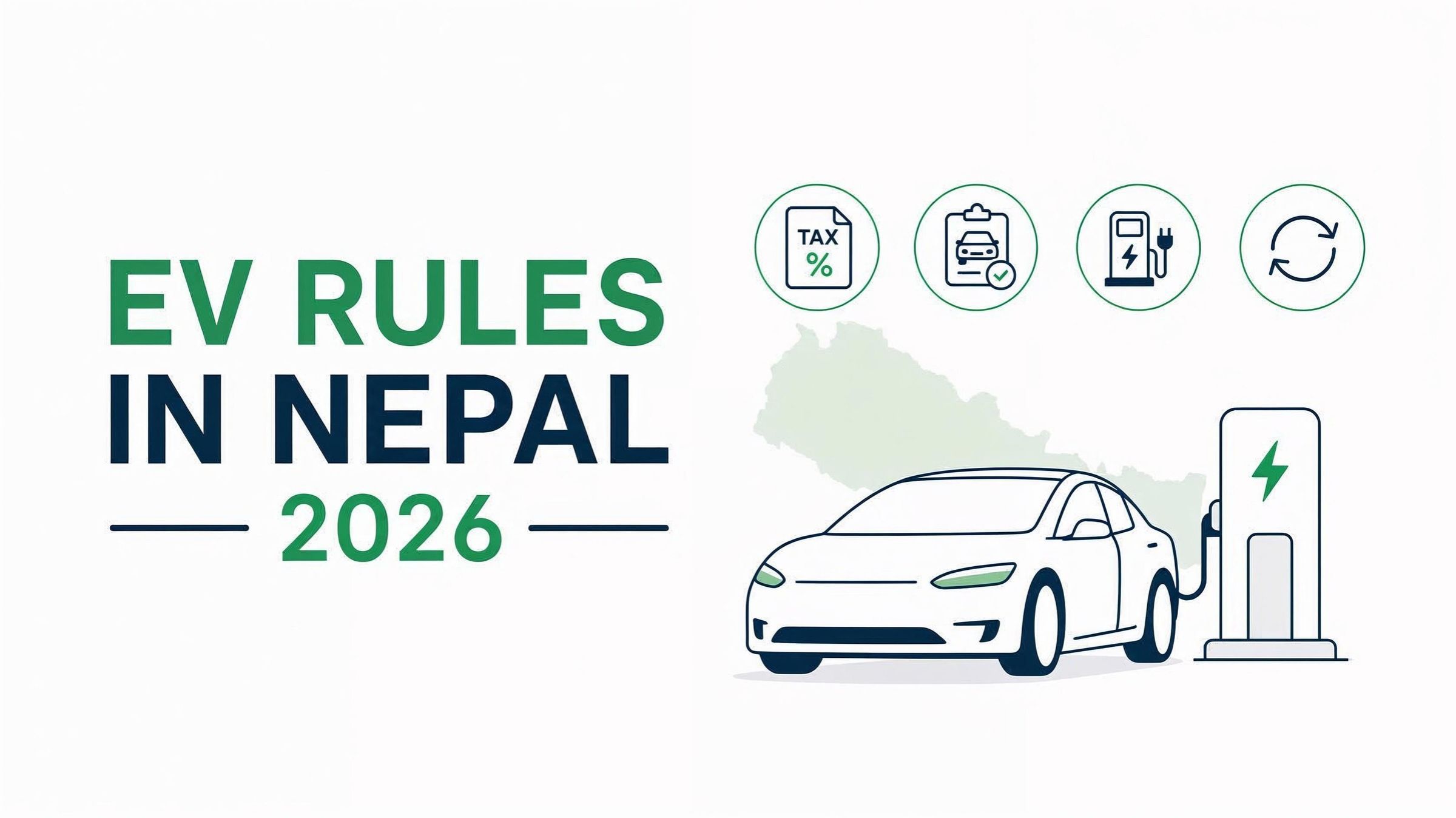
Nepal has introduced major changes to electric vehicle taxation and infrastructure rules for 2026.
Nepal’s electric vehicle market has entered a new phase in 2026. The government has changed how imported EVs are taxed while also introducing measures aimed at developing charging infrastructure and supporting electric mobility.
The biggest change is the move from a motor-power-based tax system to a vehicle-value-based system. The new framework applies from Fiscal Year 2026/27 (2083/84).
EV Tax Rules in Nepal 2026
Under the previous system, EV customs and excise duties were largely determined by the vehicle’s peak motor power in kilowatts.
The 2026/27 budget removed that system. Instead, Nepal now applies a 20% customs duty to imported EVs based on their CIF value.
The government also removed the previous excise duty and introduced a Clean Infrastructure Investment Fee (CIIF). The fee increases as the customs value of an EV rises.
Current EV Tax Structure
| EV Customs Value | Customs Duty | Clean Infrastructure Investment Fee |
|---|---|---|
| Up to Rs. 20 lakh | 20% | 2.5% |
| Rs. 20–30 lakh | 20% | 20% |
| Rs. 30–40 lakh | 20% | 35% |
| Rs. 40–50 lakh | 20% | 90% |
| Above Rs. 50 lakh | 20% | 130% |
A 13% VAT and applicable road development fee are also added to the tax structure. The exact calculation is based on the applicable customs valuation, not the showroom price.
Why Did Nepal Change the EV Tax System?
The government says the new structure addresses problems with the previous motor-power-based system.
Under the old rules, a vehicle with a lower declared motor output could fall into a lower tax bracket even if it was relatively expensive. The new system instead considers the value of the imported vehicle.
Therefore, two EVs with similar import values will face a more comparable tax structure regardless of their motor power.
However, the change has created a major difference between affordable and premium EVs.
Lower-priced EVs face relatively modest CIIF rates. Meanwhile, EVs valued above Rs. 40 lakh face significantly higher fees.
EV Prices Could Increase
The new tax structure has raised concerns among automobile importers.
Industry representatives have warned that the impact will be much larger on premium EVs. Reports estimate that price increases could range from around Rs. 2 lakh to more than Rs. 1 crore, depending on the vehicle and its customs value.
As a result, premium electric SUVs and performance EVs are likely to face greater pressure than entry-level models.
At the same time, the government argues that the revised system provides a clearer basis for taxation and removes the previous dependence on motor-power declarations.
Clean Infrastructure Investment Fee
The new Clean Infrastructure Investment Fee is another major part of the 2026 EV rules.
The government introduced the fee alongside its plans for EV charging infrastructure, battery management and domestic EV development.
The policy also includes measures to support industries involved in EV infrastructure.
For example, industries producing or assembling EV charging equipment can receive VAT-related import concessions when they meet the required conditions and obtain the necessary recommendation.
The government has also introduced support for certain locally produced batteries used in EVs.
EV Charging Station Rules
Nepal is also working to expand its charging network.
Government planning documents provide a framework for establishing public, semi-public and private EV charging infrastructure. Businesses or individuals establishing charging stations need to submit the required land, ownership, layout and charger specifications to the relevant authority.
Charging stations installed along roads also require approval from the authority responsible for that road.
Moreover, the government is targeting a much larger national charging network as EV adoption continues to grow.
EV Registration and Annual Tax
Buying an EV does not mean the vehicle is exempt from all registration-related costs.
EV owners still need to register their vehicles and pay the applicable provincial vehicle tax and renewal fees.
These rates can vary by province. For example, Bagmati Province introduced its FY 2083/84 vehicle tax schedule and made a small adjustment to annual tax for privately owned and commercial EVs with motor capacities up to 50 kW.
Therefore, buyers should check the current provincial schedule rather than assuming the same annual tax applies across Nepal.
Online Vehicle Tax Services
Vehicle administration is also becoming more digital.
Bagmati Province has introduced online vehicle tax payment. Under the new system, owners whose payment records are digitally verified through the Vehicle Registration System may no longer need to physically visit a transport office for every Blue Book renewal process.
This change is separate from EV taxation but makes vehicle ownership and renewal more convenient.
Are EVs Still Tax-Advantaged in Nepal?
Despite the major tax changes, EVs continue to receive policy support compared with conventional fuel vehicles.
The important difference in 2026 is that the government has shifted from motor-power-based taxation to value-based taxation.
Therefore, the financial advantage now depends heavily on the vehicle’s import value.
Affordable EVs remain relatively better positioned. However, expensive electric SUVs and premium EVs face a much heavier tax burden under the new CIIF structure.
What EV Buyers Should Know in 2026
Before purchasing an EV in Nepal, buyers should consider more than the advertised showroom price.
First, check the vehicle’s customs value and applicable tax slab. Next, confirm the battery warranty, charging capability and after-sales support.
It is also important to check the provincial registration and annual vehicle tax applicable to the vehicle.
Finally, buyers should consider charging access. Public charging infrastructure is expanding, but availability still varies between locations.
Nepal’s EV Policy Direction
Nepal’s 2026 EV rules show that the government is trying to balance two objectives.
On one side, Nepal wants to expand electric mobility and reduce dependence on imported petroleum. On the other, the government is looking for additional revenue from higher-value vehicles.
The new Clean Infrastructure Investment Fee also links EV taxation with future investment in charging infrastructure and battery management.
However, the sharp difference between the lower and higher value slabs has raised concerns within the automobile industry.
Conclusion
The 2026 EV rules in Nepal bring one of the biggest changes to the country’s electric vehicle taxation system in recent years.
The government has replaced the old motor-power-based structure with a 20% customs duty and value-based Clean Infrastructure Investment Fee. VAT and applicable road-related charges continue to apply.
For buyers, the key point is simple: the more expensive the EV, the higher the new tax burden can become.
Meanwhile, Nepal continues to invest in charging infrastructure and introduce policies designed to support long-term electric mobility.
Therefore, the country’s EV market is not moving away from electrification. Instead, 2026 marks a shift toward a new tax and infrastructure framework for Nepal’s growing EV industry.