



The EV Charging Breakthrough You Haven’t Heard About: Meet the Dectravalve
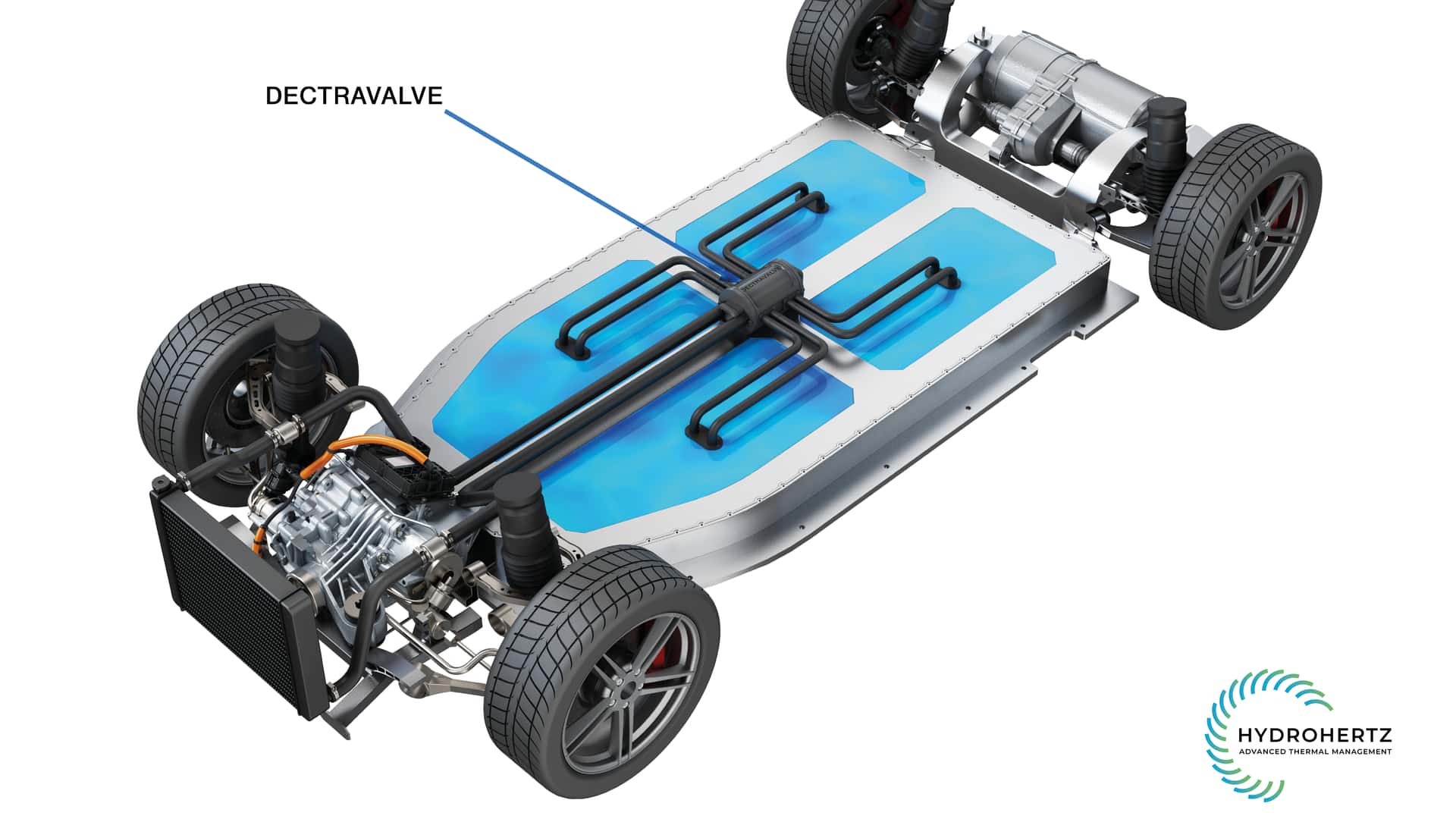
In the race to perfect electric vehicles (EVs), a UK startup, Hydrohertz, has quietly achieved a major technical feat. They developed the Dectravalve, a compact thermal management system designed to tackle the two biggest headaches for EV owners: long charging times and unpredictable driving range. This innovation doesn’t just improve efficiency; it fundamentally rethinks how a battery pack manages heat.
Engineering Precision Meets Battery Heat
Anyone who has fast-charged an EV knows the frustration. As battery cells heat up, the car automatically cuts power, turning a 30-minute stop into an endurance test. Heat stress also damages batteries over time. Traditional cooling methods often treat the pack as a whole, failing to address specific hot spots. Consequently, overheating in one area can compromise the entire battery.
The Dectravalve solves this problem with independent, multi-zone thermal control. Using a single coolant inlet, it actively manages up to four separate battery zones. The system can simultaneously apply targeted heating, cooling, or energy recovery exactly where needed. Crucially, the zero cross-flow design prevents one overheating zone from triggering a thermal “domino effect.” Best of all, manufacturers can fit it to any battery chemistry, including LFP, without redesigning the pack.
The Data Speaks: Game-Changing Performance
Independent tests by the Warwick Manufacturing Group (WMG) revealed impressive results:
- Faster Charging: The Dectravalve cut charging times by up to 68%. A typical 30-minute fast charge can shrink to just 10 minutes. During high-stress testing, it maintained a temperature difference across a 100 kWh LFP pack of only $2.6^\circ\text{C}$ ($4.68^\circ\text{F}$), preventing the power throttling that conventional packs experience.
- Improved Range and Longevity: By keeping the battery at optimal temperatures in both heatwaves and blizzards, the system can boost driving range by up to 10%. It also reduces thermal stress on individual cells, which slows degradation and extends the vehicle’s useful life.
From Startup to Standard?
Hydrohertz’s leadership team includes experienced professionals from McLaren Automotive, including CEO Paul Arkesden. Now, the company must convince major automakers to integrate the Dectravalve. Given the clear gains in speed, range, and battery health, the device presents a strong case. Ultimately, it could quickly become a standard feature in both high-performance and consumer-grade EVs.