
Traffic Police Intensifies Crackdown on Tinted Glasses Amid Calls for Clearer Implementation
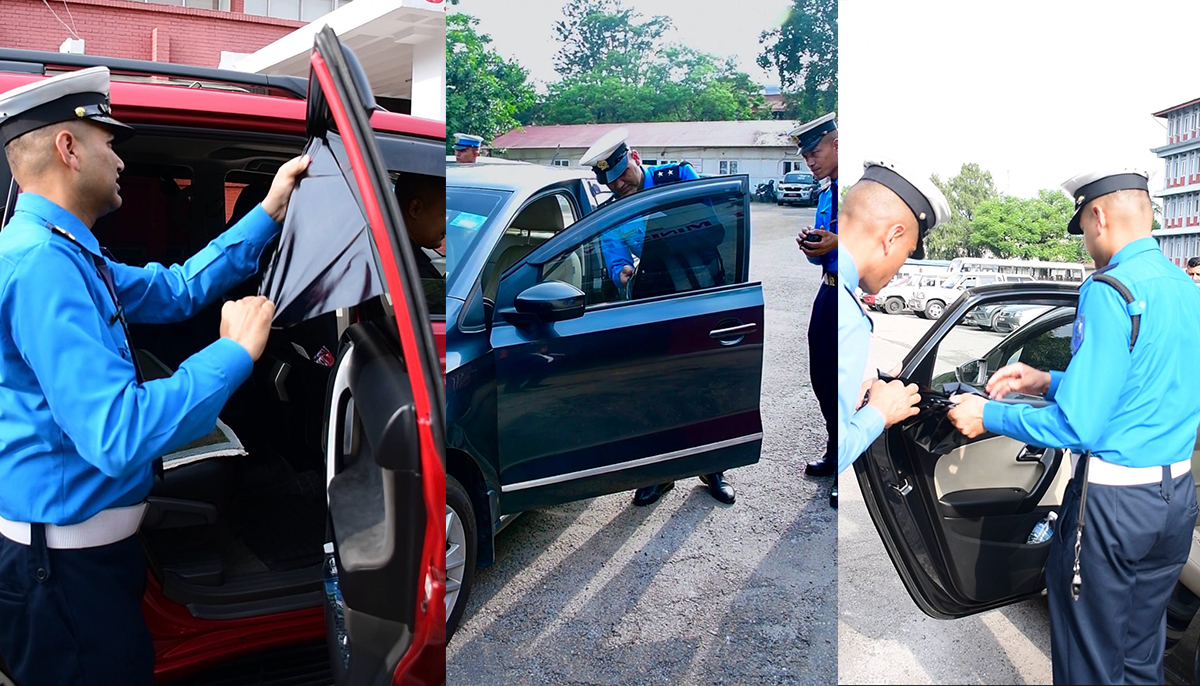
The Kathmandu Valley Traffic Police Office has launched an aggressive campaign against vehicles using unauthorized tinted glasses. This sudden enforcement drive has triggered massive waves of debate across the country.
Home Minister Sudan Gurung actively initiated the movement to set a strong legal example. Consequently, traffic teams recently entered Singha Durbar and stripped the dark stickers off the official vehicles of both the Home Minister and the Home Ministry’s Secretary.
While the police department frames this move as a critical step toward public safety, citizens are demanding much clearer implementation guidelines.
Table of Contents
- The Safety Rationale Behind the Crackdown
- The Controversial Proposed Rs 1 Lakh Fine
- The Growing Demand for Clear Standards
- Existing Laws and the 20% Tint Rule
The Safety Rationale Behind the Crackdown
First and foremost, traffic authorities argue that heavily blacked-out windows pose severe security risks. Law enforcement agencies state that dark window films directly hinder their ability to identify vehicle occupants easily.
Main Security Concerns Highlighted by Authorities:
- Criminal Exploitation: Illicit groups frequently use heavily hidden car interiors to transport weapons or illegal goods.
- Evading Justice: Absconding criminals leverage dark glass to travel across checkpoints completely undetected.
- Poor Night Visibility: Aftermarket window films significantly lower a driver’s visibility during adverse weather and late-night driving.
Therefore, the police department views the complete removal of unauthorized stickers as a non-negotiable step toward modern urban safety.
The Controversial Proposed Rs 1 Lakh Fine
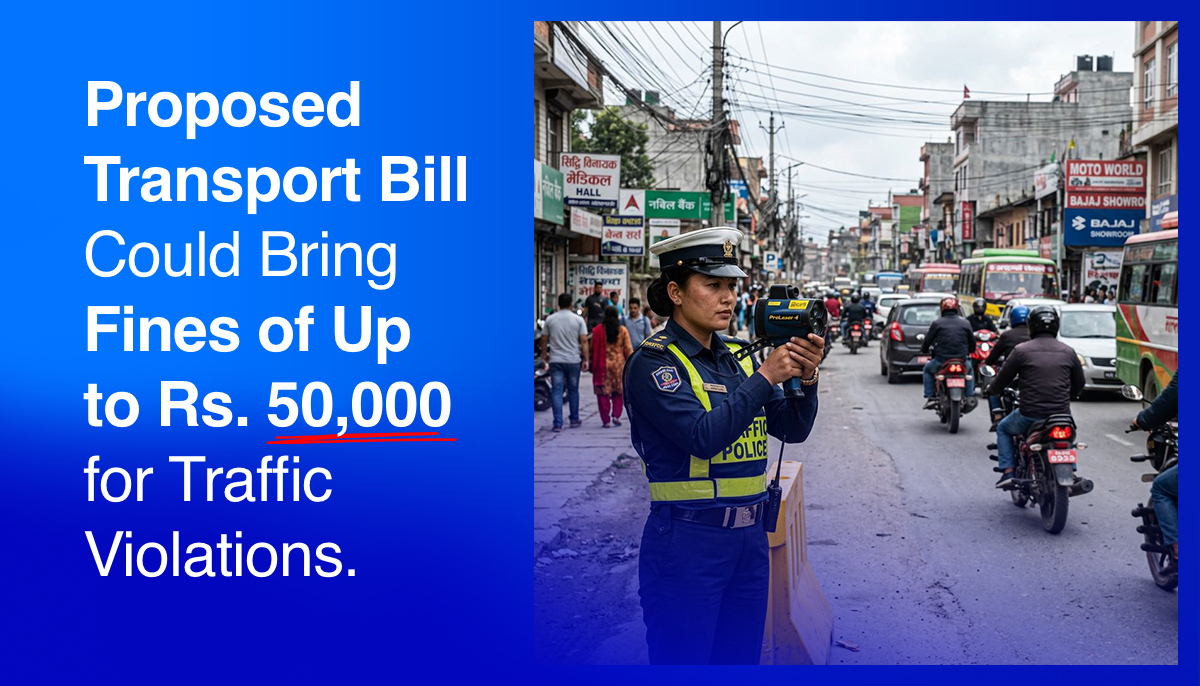
The ongoing debate intensified further due to a newly drafted legal amendment. Specifically, the Ministry of Infrastructure Development has prepared a new transport bill that introduces eye-watering financial penalties.
Under Clause 62 of this proposed bill, operating a vehicle with non-transparent or heavily tinted glass could attract an on-the-spot fine of up to Rs. 1,00,000.
Bafflingly, this proposed penalty for tinted windows is significantly higher than the fines drafted for reckless speeding or driving under the influence (DUI). As a result, motorists have flooded social media with videos of themselves peeling off their aftermarket plastic films to avoid the catastrophic fine.
The Growing Demand for Clear Standards
Although the public generally supports improved national security, the blanket enforcement strategy faces fierce resistance. The core issue rests on the lack of proper technological testing tools.
Unlike neighboring countries that use scientific Visible Light Transmission (VLT) meters, Nepal lacks digital tint measurement devices. Furthermore, many modern Electric Vehicles (EVs) and premium SUVs enter the country with permanent, factory-fitted privacy glass.
Because traffic personnel are manually tearing off plastic films, owners of premium vehicles fear arbitrary penalties. Consequently, netizens are strongly urging the government to publish definitive, measurable parameters before executing such harsh crackdowns.
Existing Laws and the 20% Tint Rule
According to the current provisions in Section 39 of the Motor Vehicle and Transport Management Act 2049, strict rules govern window modifications.
Apart from the President and the Prime Minister, no VIP or ordinary citizen is legally permitted to alter original vehicle glass without formal authorization. Under special security permissions, a maximum tint level of only 20 percent is allowable.
If you currently have dark aftermarket sheets installed on your car windows, it is highly advisable to remove them immediately. Keep a close watch on this space as the new transport bill moves toward parliament for final verification.