



Tesla Confirms Global FSD Supervised Expansion to China Market
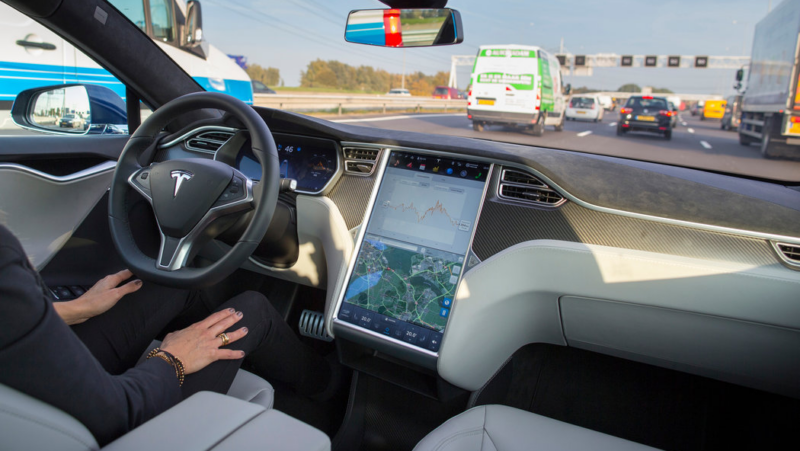
This development follows months of intense negotiations, regulatory hurdles, and strategic partnerships. Because local Chinese competitors like Huawei and Xiaomi already offer advanced urban driving suites as standard features, launching FSD is critical for Tesla to reclaim its technological edge and protect its market share.
Table of Contents
- The Global Announcement and Local Context
- An Urgent Nationwide Recruitment Drive
- Prepping the Ground with FSD V14
- Overcoming Strict Local Regulations
The Global Announcement and Local Context
The official announcement came directly from Tesla, confirming that FSD Supervised is joining a broader global rollout. This expansion spans multiple major regions across North America, Europe, and the Asia-Pacific.
While the software is now officially compatible with the region, Tesla China is pacing the actual public software release. Company executives previously targeted a release window around the third quarter of 2026. Therefore, this announcement signals that the underlying software network is completely ready for deployment.
An Urgent Nationwide Recruitment Drive
To ensure the system can safely handle some of the most chaotic driving environments in the world, Tesla has launched an urgent hiring wave for Autopilot and autonomous testing teams.
- Massive Scope: The brand is actively recruiting testing technicians across nine major Chinese cities simultaneously, including Beijing, Shanghai, Guangzhou, and Chengdu. TeslaHubs
- Real-World Testing: New hires will operate prototype vehicles on public roads to capture data from complex intersections and unique traffic patterns. TeslaHubs
- Data Labeling: Tesla is also expanding its local data engineering teams to quickly train machine learning models specifically on Chinese road behavior. TeslaHubs
Prepping the Ground with FSD V14
In tandem with the recruitment drive, Tesla China recently updated its official vehicle Owner’s Manual to version 2026.14. This documentation introduces Chinese users to the core capabilities of FSD V14.
- Tesla Assisted Driving (TAD): To comply with local guidelines, the software will debut in the region under this rebranded moniker. TeslaHubs
- Sloth Mode: The update outlines unique local safety profiles, including a cautious speed setting tailored for highly unpredictable urban alleys. TeslaHubs
- Unified AI Architecture: V14 utilizes a fully end-to-end neural network. This architecture merges standard consumer driving, advanced parking features, and smart summoning into a single cohesive system. TeslaHubs+ 1
Overcoming Strict Local Regulations
Deploying autonomous software in China requires navigating strict data privacy laws. Because the Chinese government prohibits domestic driving data from leaving its borders, Tesla had to build a completely localized infrastructure.
| Operational Challenge | Tesla’s Strategic Solution | Long-Term Advantage |
|---|---|---|
| Data Border Restraints | Local Data Center in Shanghai | Fully complies with national security laws |
| High-Precision Mapping | Deep Integration with Baidu Maps | Grants vehicles lane-level navigation accuracy |
| Pricing Discrepancy | Discontinuing one-time buyouts globally | Drives recurring subscription-based revenue |
By resolving these regulatory bottlenecks, Tesla is finally positioned to monetize its software suite in a highly competitive landscape.
To see how global autonomous vehicle software updates impact EV imports and smart driving trends locally in Nepal, follow the deep dives at Bijulidai. Alternatively, discover the latest smart dashcams and high-speed wireless charging docks at Oliz Store.